A mortgage calculator or product configurator on your website used to be something for big companies, because building a tool like that easily cost tens of thousands of euros. With AI, a micro-tool now gets built in days instead of months. That puts a tool like this within reach of a smaller business too.
What is a micro-tool?
A micro-tool is a small piece of software on your website that helps visitors with one question. Think of a calculator that works out a price, a product finder that recommends the right product or a checker that analyzes something for you.
You run into them more often than you think: the calculator on your mortgage advisor's site, the electrical panel configurator at an electrical supply store or the energy comparison tool on a comparison site. Or closer to home: the coffee machine product finder (in Dutch) that finds the right machine in five questions, and the bathroom style quiz (in Dutch) that gives a style recommendation based on your personality.
The idea is that your website does something for the visitor, instead of only telling them something.
What a tool like this brings you
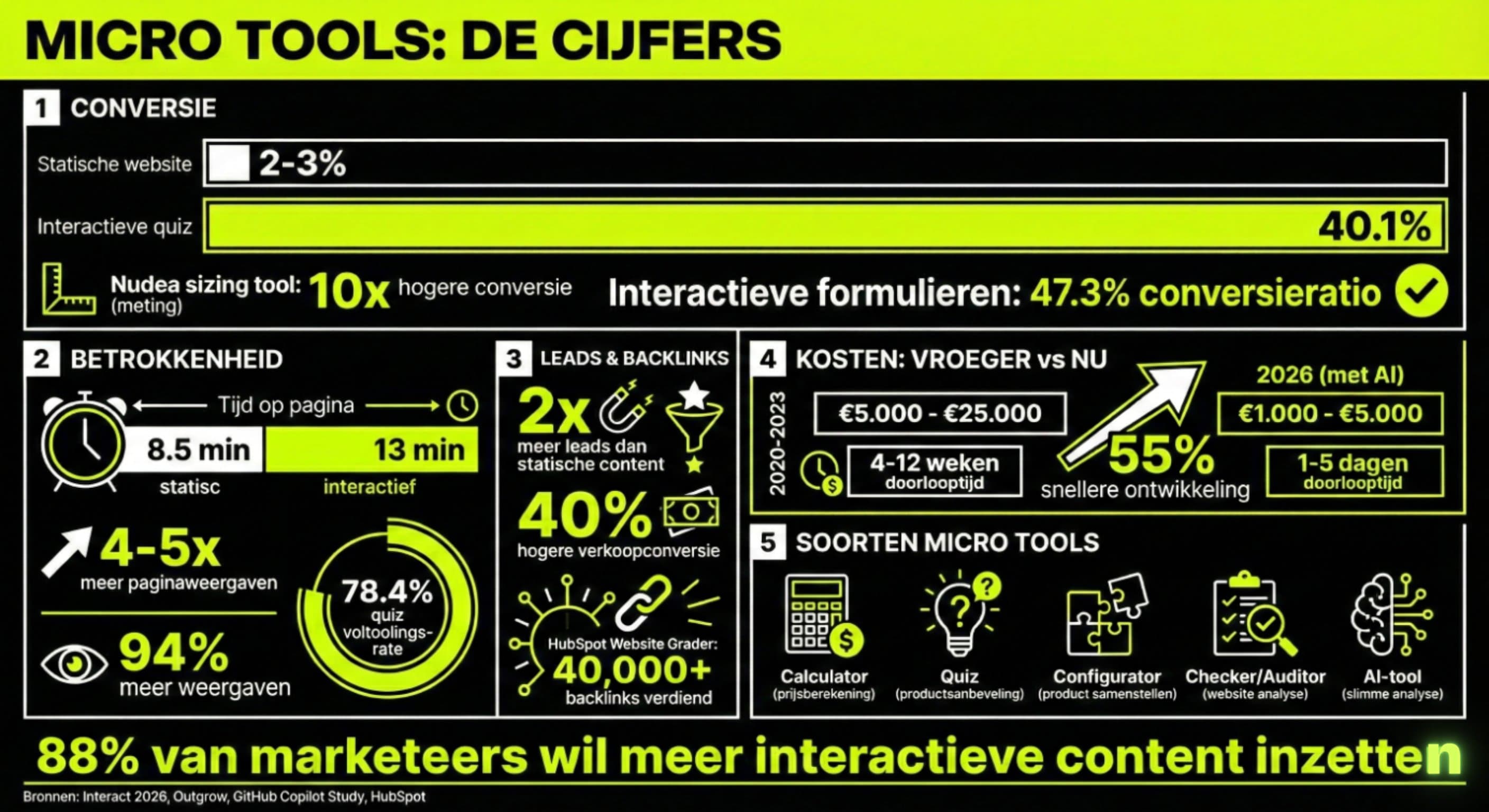
A visitor who fills something in, calculates something or makes a choice is more involved with your site than someone who only reads. The British lingerie label Nudea told the fashion trade magazine Drapers that customers who find their size with the fit quiz on the site buy more often and return less than regular visitors. A tool like that keeps visitors on your site longer and makes the step to contact smaller, because they have already gotten something out of it.
There is an SEO benefit too: a useful tool gets shared and linked to. HubSpot's free Website Grader is a well-known example. Other sites have been pointing to it for years, and that one tool earned HubSpot a big pile of backlinks.
Utility marketing
The strategy behind micro-tools is called utility marketing: you help your visitors before they buy anything from you. They work something out with your tool, see that you know what you're talking about, and when they have to choose later, there's a good chance they remember who helped them.
What a micro-tool costs
Until recently, having an agency build your own calculator or configurator easily cost thousands of euros, and a web application with a database and integrations with other systems ran up to tens of thousands. On top of that came weeks to months of build time. That made micro-tools realistic only for companies with a sizable marketing budget.
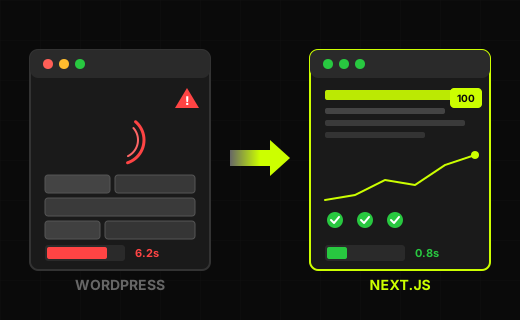
AI has changed that a lot. In a 2022 GitHub experiment, programmers with an AI assistant finished the same programming task 55% faster than programmers without one. A micro-tool that used to be weeks of work, I now build in days, so it now costs between €500 and €3,000, depending on what it has to do. Is your site already running on a modern framework like Next.js? Then building it in takes even less time and money.
That is because the programming hours were always the most expensive part of a tool like this, and that is exactly the coding work AI takes over for the most part.
How to build a micro-tool, in three steps
The hardest part now is deciding what to build: what exactly should the tool do, and which question from your customer does it help with? I notice that in every project, including when building websites with AI. AI writes the code, but only you know which questions your customers have, because you talk to them.
Step 1: find the question customers keep asking you
A good micro-tool starts with a question your customers ask often, like “what does this cost?” or “which one suits me?” If you notice you keep making the same calculation or giving the same explanation, a tool can answer that question for you.
Step 2: test whether people will use the tool
Not every idea works as a tool. Does it solve a real problem, or is it just a nice gimmick? A mortgage calculation works because nearly everyone buying a home has that question. A “discover your style” quiz only works if it fits what you sell and who buys it.
Step 3: build and test
Once the idea is settled, building goes fast. First you define what the tool has to do in the background (the logic, the calculations, possibly an AI connection) and what the front end looks like, in your own visual identity. With AI, a working prototype is ready within a few days. Then comes a feedback round with adjustments, and then the tool goes live.
For the whole process, from the first idea to launch, usually count on 1 to 3 weeks.
Examples of micro-tools
These are tools I have built or am working on now.
Coffee machine product finder
For Koffienoob I built a product finder that recommends the right type of coffee machine in five questions, with the two best-fitting machines alongside. The engine underneath knows well over a hundred reviewed machines and runs in nine variants across the whole site, from grinders to beans. Koffienoob is also my own site; in the Koffienoob case study you can see what this approach does for the site.
Bathroom style quiz
For Badkamereend I built a style quiz that determines your ideal bathroom style in six questions. The questions are about your personality and how you live, instead of which tile you like. You get a style recommendation that connects to the articles on the site.
Compliance tools for the consultancy Empact
For the consultancy Empact I built two free AI tools around European regulation. The DPP tool analyzes product documentation and shows which of the information required for the Digital Product Passport is already there, and what is still missing. The PPWR tool turns the new packaging regulation into a personal task list with deadlines. Both make complicated rules manageable, and that is how Empact gets in touch with companies that have to deal with them themselves.
Calculators for an accountant
An accountant I'm in talks with wants calculators on his site, such as a VAT calculation and a profit forecast. People who start calculating on their own and find it more complicated than expected know right away who to turn to.
Electrical panel configurator for a technical online store
For the online store Weltechniek I built an electrical panel configurator: you put together your own electrical panel and see every choice right away in a live drawing and an estimated price, while a NEN check (against the Dutch standards for electrical installations) enforces the installation rules. This is exactly the product where visitors would otherwise drop off, because hardly anyone knows what belongs in their electrical panel.
Driving school comparison on my own platform
The biggest one among my own projects: the comparison tool of Rijloket, my own platform that compares 7,383 driving schools on real pass rates from the CBR (the Dutch driving test authority) and reviews. The same principle as a micro-tool, but at scale: three datasets in, well over 8,500 pages out. You can read more about the platform itself on the Rijloket page.
And then there are the tools I built for Vizibly itself: a website score checker, SEO checker, website speed test and accessibility checker. They are free, and anyone who runs their site through them sees right away what I can do.
Your website as software
Most websites are still digital brochures: text, images, a contact form. That was enough for a long time, but visitors increasingly want to try something out before they get in touch, like working out a price or getting a recommendation.
A micro-tool gives your visitors that, without you having to become a software company. One tool that fits your trade can turn your website into a place where inquiries come in. On a B2C website with a request button that is often a calculator that answers the question about price before anyone calls, and on a restaurant site where guests book directly, booking itself is already a piece of software like that. Building one now costs a fraction of what it used to. A good idea comes from the questions your customers keep asking you.
Want a micro-tool on your website too?
I build product finders, calculators, quizzes and AI tools that answer your customers' questions. Call +31 6 282 064 10 or schedule a call.
SCHEDULE A CALL