Type your business name into Google. Do you get a box on the right with your logo, your address and your reviews? Or a list of businesses that happen to share your name? That difference is what entity SEO is about. Google and AI search engines try to work out, for every name, which business is behind it. In this article I explain how that works and what you can do yourself.
What Google means by an entity
In 2012 Google introduced the Knowledge Graph, a database of things and how they relate to each other. The slogan was “things, not strings”. The word “Jumbo” is a string. The Dutch supermarket, the airplane and the elephant are three different entities that happen to share the name.
For you as a business owner, that means this: plenty of bakeries in the Netherlands are called “Bakkerij Jansen” (Jansen Bakery). Google has to know which Bakkerij Jansen you are, where you are, what you do and whether others confirm it. Entity SEO, also called entity building, is the work of making that picture complete and unambiguous.
Why this matters for you now
Since May 2025, AI Overviews have appeared above Dutch search results, and since October 2025 there has been a separate AI Mode. An answer like that names a handful of businesses instead of ten blue links. Someone who searches AI Mode for a plumber in Goes (a town in the Netherlands) often sees only a few names. If yours isn't among them, that customer calls someone else.
A good position for a keyword is no longer a guarantee either. Ahrefs analyzed 863,000 search results in March 2026: only 38 percent of the sources Google cites in an AI Overview also appear in the regular top 10. Almost a third aren't even in the top 100.
What does correlate with it? Ahrefs looked at 75,000 brands in 2025: how often a brand is mentioned by name on the web. That was three times more strongly linked to visibility in AI Overviews than the number of backlinks. Ahrefs itself adds that this is a correlation and doesn't yet prove cause and effect.
There is something else too, unrelated to AI. People who type in your business name are already almost customers: they got your name from a neighbor, a van or an invoice. If Google recognizes you as one business, they immediately get your phone number, your opening hours and your reviews. If Google doesn't, they get a list of businesses with the same name, or worse, the reviews of that other Bakkerij Jansen.
And this work builds up. An ad disappears the moment you stop paying. A piece in the regional newspaper is still there five years from now, and all that time it confirms who you are.
What Google itself says, and what it doesn't
Plenty of stories are going around about AI visibility, so here is the official line. In May 2026 Google published a guide to searching with AI. Its core message: there is no separate AI optimization, it is simply SEO.
Google ignores an llms.txt file. Building separate pages for every little question an AI might ask falls under the spam policies. Structured data isn't required to appear in AI answers. And chasing fake mentions helps less than it seems.
What Google says does help: a Google Business Profile, because it makes your services visible in AI answers and in regular search results. For a business with a service area, that profile is the core of local SEO anyway.
And reputation outside your own site. The guidelines for Google's quality raters (September 2025 version) tell raters to be skeptical of what websites claim about themselves. They are supposed to search for [business name -site:yoursite.com] to see what others say. Your own social media profiles don't count as an independent source there.
A reassurance from that same document: a small business with no reputation on the web gets no penalty for it. Google calls that neutral.
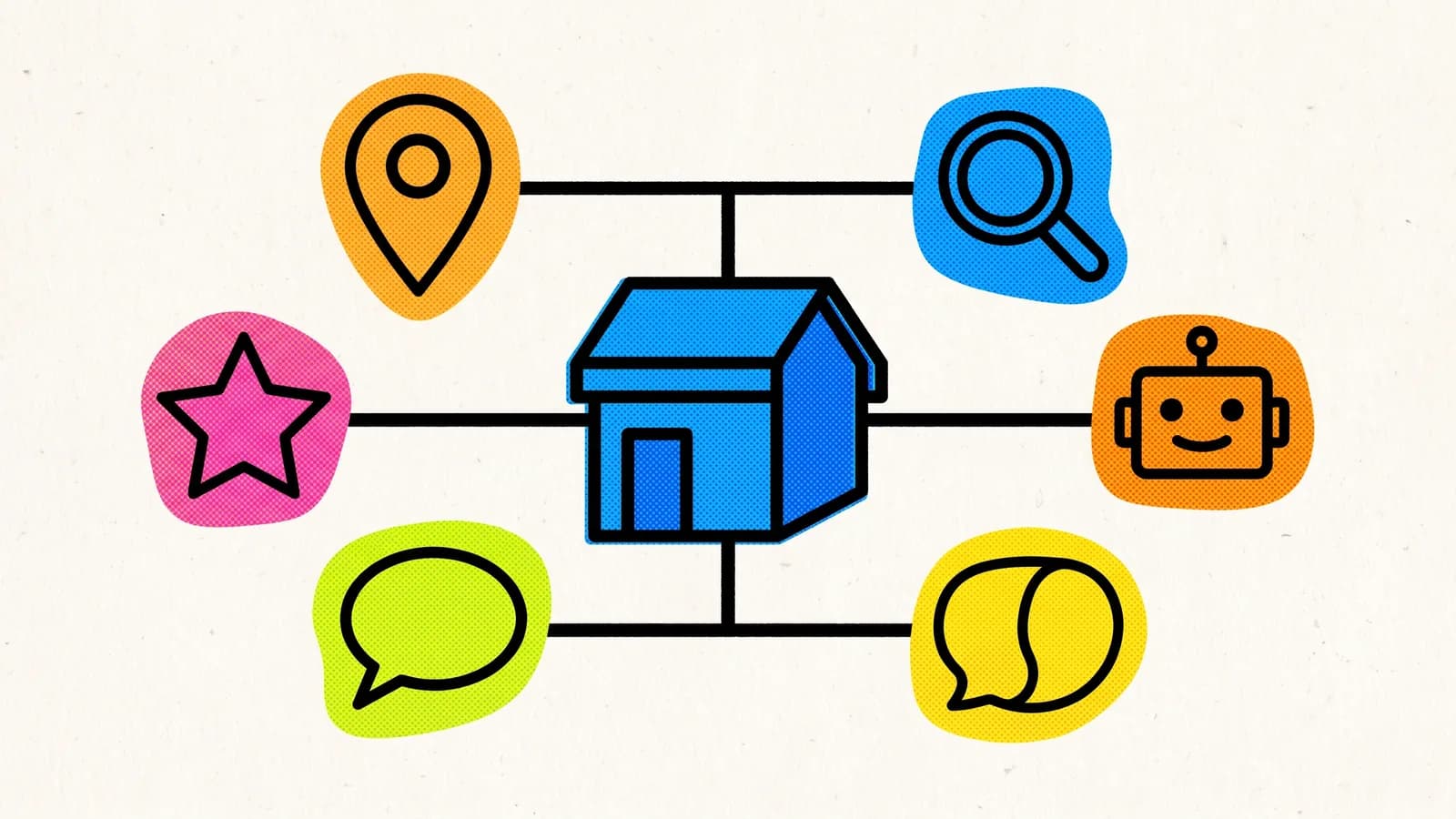
How to build your entity: six steps
- 1. One name, the same everywhere. In your Business Profile, Google wants the name as it appears on your storefront, your website and your letterhead. If you're registered with the Chamber of Commerce (KvK) as “Bakkerij Jansen” and on Facebook as “Jansen Bakt” (Jansen Bakes), Google has to guess whether that's one business. Pick one spelling and apply it everywhere.
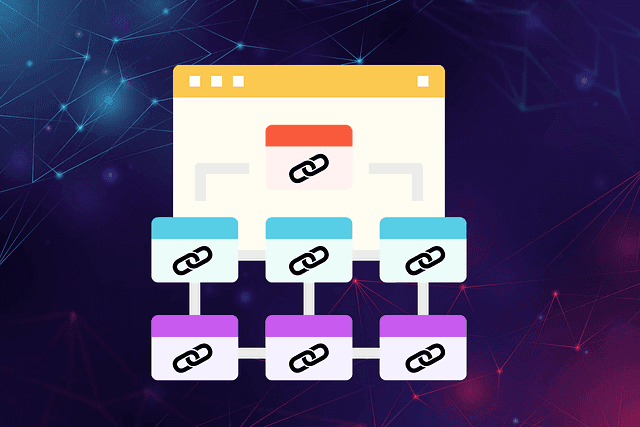
- 2. One home base. Google advises putting your business details on your homepage or on one about page. That's the page where everything comes together: who, what, where, since when and who is behind it. If your story appears in three places, each slightly different, Google doesn't know which version is right.
- 3. Point to your other profiles in your code. In your site's code, the sameAs field lets you say which other pages are about your business: your Business Profile, your LinkedIn company page, your Chamber of Commerce listing. That tells Google those pages are about the same business, so only list profiles that really are. A small job for your web developer.
- 4. Let others confirm it. This is the step that does the most and takes the most work. Reviews on Google, a listing with your trade association, a piece in the regional newspaper, a customer who mentions you on their site. Exactly the sources Google's raters are supposed to look up. Wikidata, the free database that sits alongside Wikipedia, comes only after that: your own item first requires independent publications about your business.
- 5. Stick to your trade. The leaked Google documents of 2024 mention siteFocusScore and siteRadius: a measure of how tightly focused a site is on one topic, and how far individual pages stray from it. A plumber who suddenly blogs about cryptocurrency makes his own entity blurrier.
- 6. Write what AI wants to cite. Researchers from Princeton, among others, tested in 2024 which changes to a text increase visibility in AI answers. Quotes, concrete numbers and source references scored best, with up to 40 percent more visibility. Repeating keywords scored negatively. Check your robots.txt too: if you block OAI-SearchBot, you won't show up in ChatGPT's search results.
A ten-minute self-check
- Google your business name. Is there a box on the right with your logo, address and reviews? Then Google recognizes you as a business. Is there nothing, or a business with the same name? Then you start at steps 1 and 2.
- Search for [your name -site:yoursite.com]. What remains is your reputation as Google sees it. If nothing remains, your work starts at step 4.
- Open Search Console. Since November 2025 you can filter there on queries containing your brand name. If the number of queries on your name goes up, your entity is growing with it. With few impressions, the filter isn't available yet.
- Ask ChatGPT, Gemini and Perplexity. “What is [business name] in [town]?” Are the facts right, and which sources do they cite? That tells you what picture those tools have of your business right now. What this doesn't show is how often they mention you unprompted.
How Vizibly is set up
Google Vizibly and you see the box on the right with the logo, an address in Middelburg and the reviews. In the code of vizibly.nl, everything connects to one node: a LocalBusiness block with the name, the address, the link to the Business Profile and the link to me as a person. Every page points to that same node, so Google doesn't have to guess which Vizibly is meant.
For clients I build it up in the same order as the six steps in this article: first the name and the about page, then the connections in the code, then the patient work on mentions. A mention in a trade magazine does little if Google can't yet attach it to the right business.
If you outsource SEO, you can expect your agency to have this foundation in place before it starts tweaking individual keywords.
Frequently asked questions about entity SEO
What is entity SEO, in short?
Entity SEO means making sure Google and AI search engines recognize your business as one clear thing: which name, what you do, where you are and who is behind it. You do that with one consistent name, one home base on your site and confirmation from other sources.
Is entity SEO different from regular SEO?
No. Google itself writes that optimizing for AI search is simply SEO. Entity SEO is the part that deals with your business as a whole, rather than with individual keywords and individual pages.
Do I need a knowledge panel?
No. Google creates knowledge panels automatically when enough information about you exists on the open web. You can’t ask for one, but you can create the conditions: a consistent name, a Business Profile and mentions by others.
Does structured data improve my position in Google?
No, structured data doesn’t give you a higher position. Google says it makes a richer display in search results possible without guaranteeing one, and that it pulls information about businesses and people from it. So it helps Google link your business details to the right entity.
Do I need to do anything special for ChatGPT or AI Overviews?
According to Google, no: no llms.txt, no separate pages for AI. What does count is that your page is indexed, that others mention your name and that your text is concrete, with numbers, quotes and sources. Also, don’t block OAI-SearchBot in your robots.txt.
Can I do this myself?
Half of it, yes: choosing one name, getting your about page in order, asking for reviews and keeping your Business Profile up to date. The connections in your site’s code and the work of earning mentions are specialist work.
Does Google know who you are?
Vizibly System measures your site and your market every day, and every month I act on what the numbers point to. Your name, your about page and the connections in your code from this article are part of that. The first step is looking at where you stand. Schedule an intro call.
HOW VIZIBLY SYSTEM WORKS