WEBSITE + CMS + TRANSLATIONS
takeoff
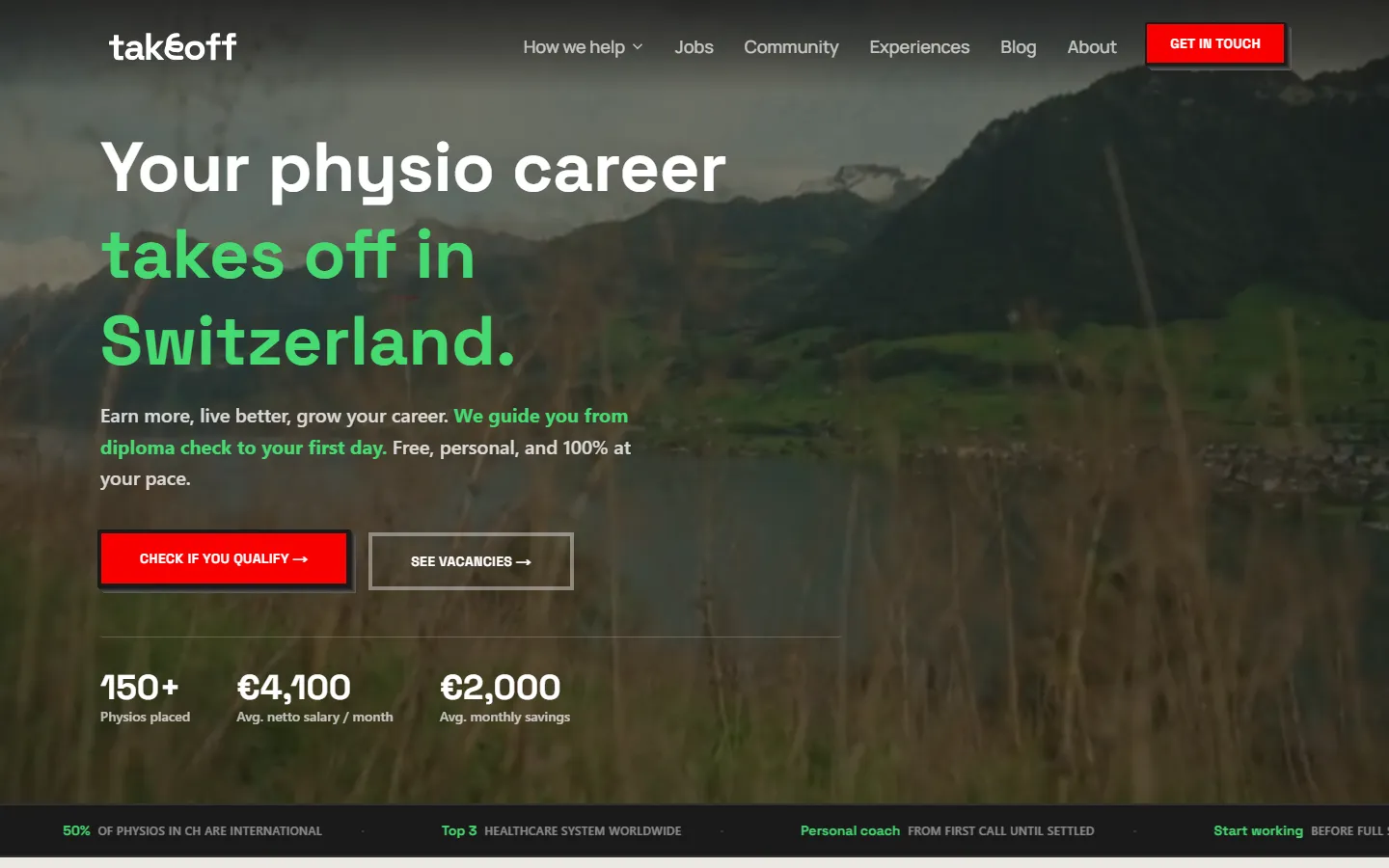
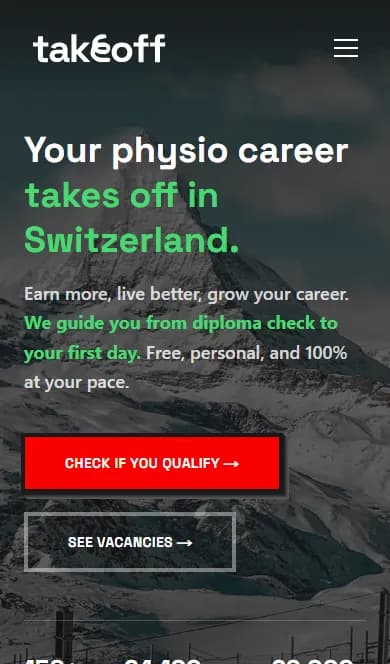
takeoff helps physiotherapists find a job in Switzerland, free of charge: diploma recognition, a language course, housing and a community of hundreds of colleagues. For the expansion into Eastern Europe, I built a new multilingual website alongside what was already running, with its own CMS, so the team can publish content themselves.
THE BRIEF
A new site for the expansion into Eastern Europe
takeoff was founded by Tijmen and Ben, two physiotherapists who moved to Switzerland themselves. They have since helped hundreds of colleagues make that same move, and now they want to do the same in Eastern Europe.
That took more than a few translations. It called for a fast site where you can add a new language or market without any hassle, and that takes a visitor all the way to signing up. Just like with a website for a healthcare practice, that visitor first wants to know who they'll be dealing with, and only then do they sign up.
The result was a new site on Next.js, running alongside what takeoff already had. That site is set up to be multilingual, with Polish as the first language and the rest of Eastern Europe in sight. It also got its own CMS, an admin area where Tijmen and Ben, and soon the translators, keep everything up to date themselves.
THE APPROACH
How the new site is put together
A fast Next.js foundation
The site runs on Next.js, with clean URLs, structured data and breadcrumbs, so Google can properly read how each page is built. After four rounds of optimization, it scores 86 on mobile in PageSpeed and above 95 on desktop.
Multilingual, aimed at Eastern Europe
The languages run through next-intl and an AI translation pipeline. A new language first goes online hidden from view: the pages are linked, translated and proofread, and only then does the language become visible. Poland is the first market, and the rest of the region follows the same way.
A CMS of its own for the team
The CMS is Keystatic. Tijmen, Ben and the translators log in with their email address or with GitHub, and keep the physiotherapists' stories, the job openings and the dozens of blog posts up to date there themselves.
A language code for Google and over 60 blog posts
Every language version has hreflang, a small piece of code that tells Google which version belongs to which language. On top of that, there are more than 60 blog posts about moving, diploma recognition and working in Switzerland.
WHY THIS WORKS
What takeoff gets out of it
A separate version for each language
Google indexes each language version separately. When a Polish physiotherapist searches in Polish, they can land right on the Polish pages.
Built around signing up
Every page leads to the sign-up. Along the way, anyone still on the fence reads stories from physiotherapists who already made the move, sees the numbers and gets to know the community.
Room for new countries
A new language or market is added to the same site and can be online within a few days. The team doesn't need to have anything rebuilt for it.
In their own hands
The team posts a new job opening or a physiotherapist's story online themselves, the moment it's relevant, without needing a developer.
More case studies
All case studies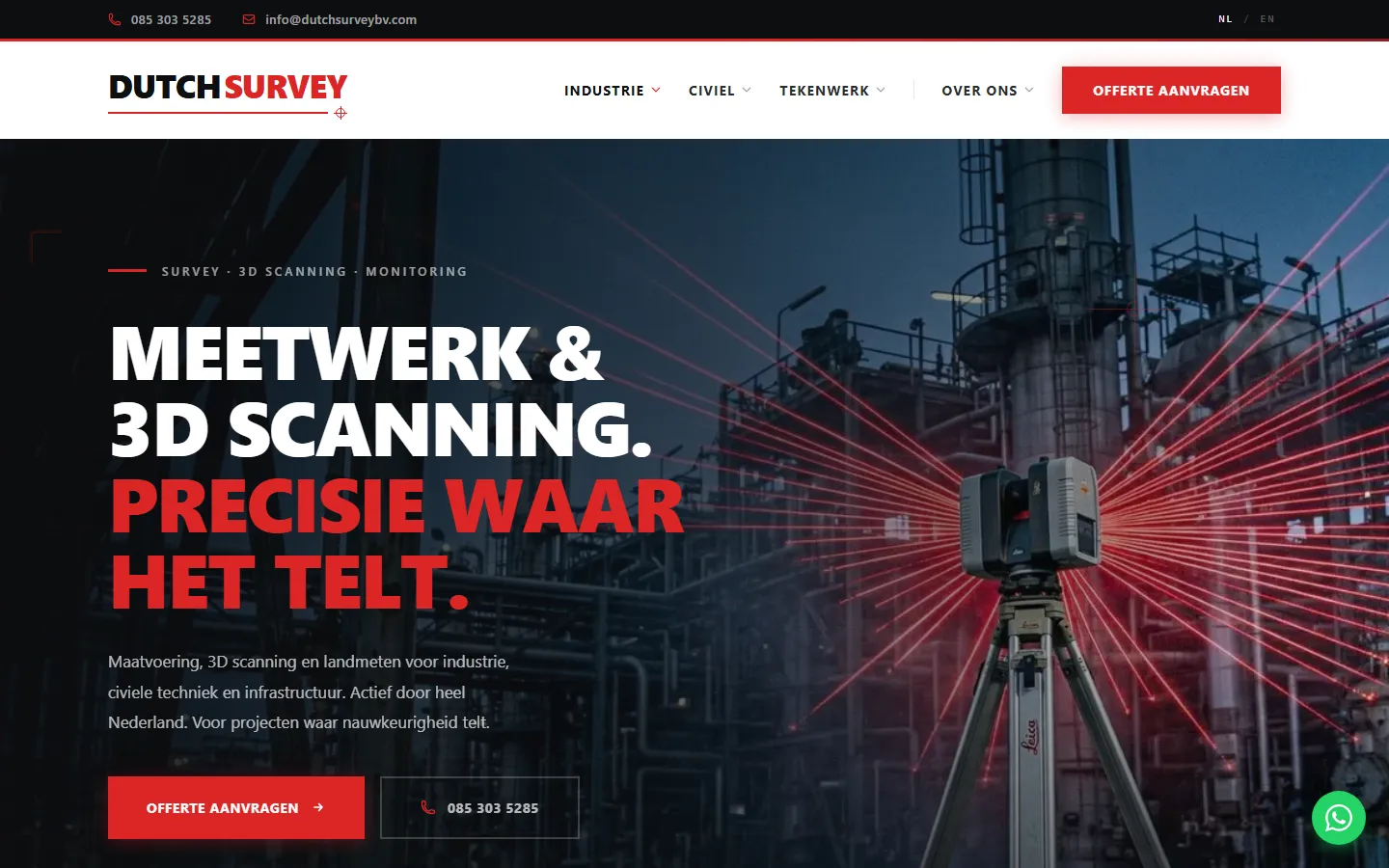 WEBSITE
Surveying & 3D scanning
A bilingual website for a specialist in 3D laser scanning and surveying, with an industrial design and its own CMS. Built to win over international clients.
VIEW CASE STUDY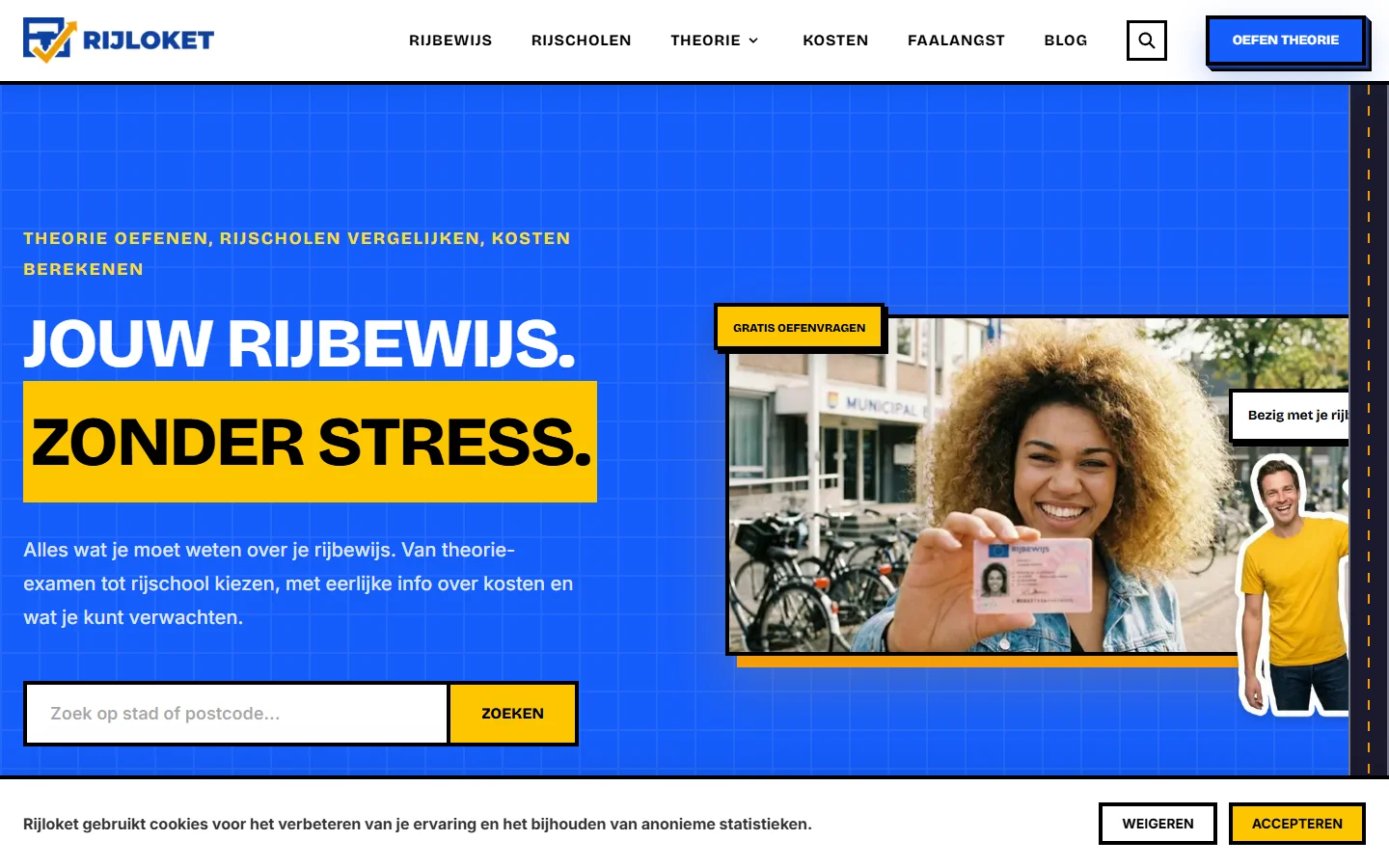 WEBSITE
My own platform · driving schools
Find and compare Dutch driving schools by their official exam pass rates and researched lesson prices, and practice the theory test for free with 170 questions.
VIEW CASE STUDY SEO
Ecommerce
+1,500%Revenue
In two years, an online florist grew from 1,700 to 10,000 organic visitors a month, and revenue rose by 1,500%.
VIEW CASE STUDYPlanning a second language or market too?
I build a fast site that you keep up to date yourself, and that can take on a new language or market later without a rebuild.