The challenge
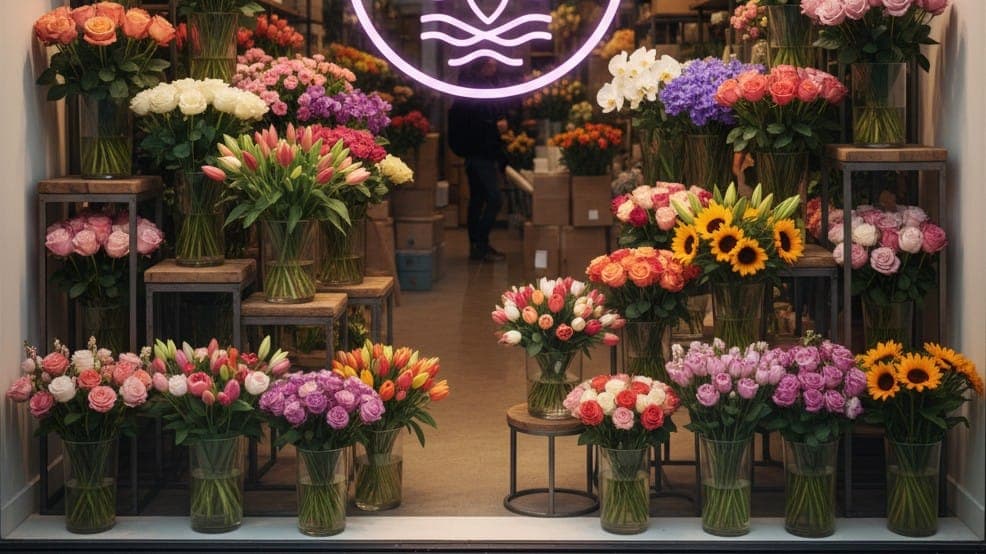
This online florist had a beautiful online store with good products, and an in-house marketer who made sure visitors could order easily and the email campaigns kept running.
But people who searched for "bloemen bezorgen" (flower delivery) didn't find the store. Most of the traffic came from people who already knew the store's name and typed it into Google. Anyone who didn't have a shop in mind yet ended up at a competitor.
What was missing
There was no SEO strategy yet: nobody had worked out which pages the store needed. The copy that was there wasn't written around the words people actually use when they search. The pages for each town had no clear topic. And too few other websites linked to the store for it to stand out among big names like Fleurop and Topbloemen.
The approach
The florist's marketer kept handling the store and the email campaigns, and I took care of the SEO. I kept building it out, month after month.
A hundred towns, each with its own page
I wrote a separate page for each of a hundred towns, each one written for that town alone. A page like that helps the visitor and shows Google which town it's about. I mainly picked towns where local florists ranked low in Google: small villages and suburbs, where the big players don't put in much effort.
New backlinks every month
A backlink is a link on another website that points to your online store, and Google counts a link like that as a recommendation. Every month, I secured links from strong websites that fit the topic. Those links pointed to the homepage, the blog posts, the categories and the most important town pages.
Articles that answer visitors' questions
I wrote articles about the language of flowers and about "buy now, pay later," plus tips for people with hay fever. Anyone who looks up one of those topics lands on the store through an article like that, and Google sees that the store knows its flowers.
A page of its own for every flower and occasion
Roses, lilies, tulips and funeral bouquets each got their own page with their own copy. Someone searching for a particular flower or occasion lands right on the page where they can order it.
Pages linked together logically
I made an overview of the towns for each province, put a breadcrumb trail at the top of every page (the small line that shows where you are on the site), and linked related pages to each other. That way, visitors and Google can find their way around.

The results
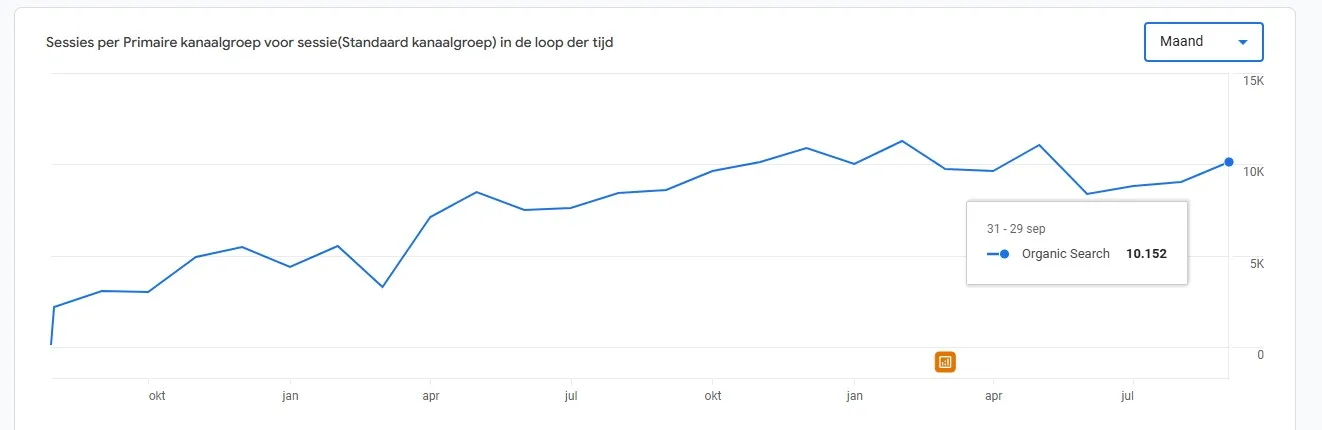
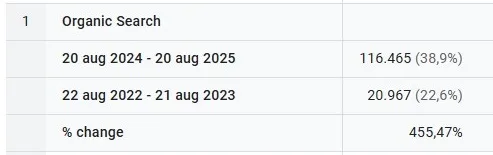
- ▸Organic traffic: from 1,700 to 10,000 visitors a month (488% growth)
- ▸Revenue from organic traffic: +1,500%
- ▸Number of buyers: +862%
- ▸New customers: +892%
Rankings in Google
- ▸Position 5 for "bloemen bezorgen"
- ▸Dozens of #1 rankings for local search terms ("bloemist" or "bloemenwinkel" plus the town name, Dutch for florist and flower shop)
- ▸A large number of top 3 rankings for product-specific terms such as "lelie boeket" (lily bouquet) and "bloemen met vaas bezorgen" (flowers delivered with a vase)
The biggest gains came from searches with a town name in them. The big players mostly have general pages, while this florist has a page of its own for each town. That's why it ranks #1 in a lot of villages and neighborhoods.
What this shows
This florist already had an online store that was well put together. On top of that, I did two years of monthly ecommerce SEO, and that's how traffic from Google grew from 1,700 to 10,000 visitors a month.
Is your own online store doing well, but new customers can't find it in Google? Give me a call: +31 6 282 064 10. In 15 minutes, I'll tell you what needs to happen.